

Honest Advice: Pros & Cons of Breastfeeding with a Nipple Shield
What is a nipple shield?
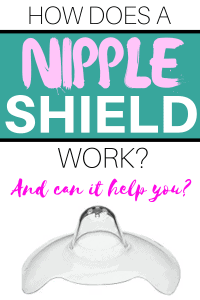
A nipple shield is a thin silicone guard shaped like a mother’s nipple with holes in the middle. The shield is worn over a mom’s nipple to help them continue to nurse their baby if they are having any pain, difficulty, or have inverted nipples.
Nipple shields have actually been around for at least 500 years! (Source)
A nipple shield can be a bit controversial and I realized this when I wrote this post here over a year ago.👇
I wrote that post because breastfeeding with a nipple shield is what made it possible for me to continue nursing my baby. It was my second baby and I thought I had breastfeeding down with no problem!
I’ve learned to never be too sure of myself when it comes to parenting!
Then boom…..
All of a sudden the pain was so intense and my nipple was bleeding! Yes, I’m not even kidding you!
I had a bleb (milk blister) which eventually popped. I was recovering from a c-section with a new baby and a 2-year-old to chase after. My husband went right back to work, I had no family around for help and had zero time for pain in more places than I already had to begin with!
Even though the bleb was so painful, I still wanted to nurse because I breastfed my older daughter and this was what I was used to! Not to mention, I knew breastfeeding was the best protection against colds and was the best way to build up their immunity.
It broke my heart the thought of just pumping or quitting altogether when she was only a few weeks old.

So what saved me???
Breastfeeding with a nipple shield!
I was so grateful for it! I didn’t have time to constantly pump and the shield protected my nipple while recovering and I was still able to breastfeed my baby through the entire healing process!
Amazing!
I will explain to you the pros and cons of breastfeeding with a nipple shield.
Most lactation consultants wouldn’t advise you to use one right away. The best advice they would give you is to correct your baby’s latch first so you won’t need a shield! And that is very important!
However, in some cases you might need one anyway.
Here are the pros and cons of breastfeeding with a nipple shield so you can make the best decision for you and your baby!
PROS of Breastfeeding with a Nipple Shield
- Nipple shields can help newborn babies open their mouths wider and learn how to latch properly.
- Nipple shields can benefit small or sick babies in the NICU who have difficulty latching correctly.
- If your nipples are sore or in any pain, a nipple shield can protect your nipple so you can continue to nurse your baby while it recovers. It can help you through battles of milk blisters, thrush, and other breastfeeding issues.
- A nipple shield is such a big help for those moms that want to breastfeed but have inverted nipples which make nursing their baby incredibly difficult.
- A nipple shield can benefit moms who have had cesarean sections and find it difficult to sit up correctly and get their baby to latch. The support of the shield directs their baby where they need to go without having to adjust their body as much and be uncomfortable.
- A shield can also help those babies who may have been given a bottle in the NICU first. The feel of the nipple shield will feel like a bottle and they may be more inclined to breastfeed with the shield easier.
CONS of Breastfeeding with a Nipple Shield
- A nipple shield used for too long may cause some confusion with your baby. It is best to only use the shield when absolutely necessary for short periods of time. Some women say they had issues getting their babies to nurse without a shield and became dependent on one.
- A nipple shield is made out of silicone so you need to be cautious if your baby is allergic to anything in the nipple shield.
- If not cleaned and sanitized correctly, a nipple shield can get dirty and have bacteria built up on them just like a baby’s bottle. Nipple shields need to be cleaned frequently and thoroughly which can be a hassle since newborns nurse many times throughout the day and night.
- Your baby may get less milk through a nipple shield especially if it doesn’t fit your nipple correctly.
- If enough milk isn’t getting passed through to your baby, it can cause a blocked milk duct. A blocked/clogged milk duct can be painful and cause more serious issues which can lead to mastitis.
- Also remember, if your baby wasn’t latching correctly in the beginning which caused your pain to use a shield, the shield may not completely fix the latching problem. Be sure to switch back and forth from shield to bare skin so they can learn to latch properly on your nipple, not just on the shield or your pain will continue.
Which Nipple Shield Is Right For You?
As mentioned above, make sure you get the right size nipple shield for yourself. This will be important because you want to be sure your nipple is stimulated enough through the shield so that plenty of milk goes through the holes.
If the shield doesn’t fit correctly, then you may encounter milk supply or clogged duct issues which is the last thing you need to deal with as a new mom!
If you do have trouble getting a clogged milk duct, read this post to help you treat it fast and naturally before it gets worse!
There are a few nipple shields I recommend. Two of them I have used and one is recommended by lactation consultants because of its cherry nipple shape that closely resembles an actual nipple.
I wasn’t lucky enough to know about this nipple shield when I needed it, but I wish I had!
The Mamivac Cherry Nipple shield also comes in a little case to store your shields which really comes in handy!
All are available on Amazon. Click the photos below for more details.
Mamivac Cherry Nipple Shield 👇


Nipple Shields I have used:


Tips For Breastfeeding with a Nipple Shield
- Be sure to get the right nipple shield size for your nipples. It’s always better to go bigger than you think you may be.
- A small nipple shield can be painful and won’t be able to get enough milk through the nipple shield holes. If you aren’t sure what size nipples you have, buy two sizes and test them out.
- If you are using a nipple shield and it fits your nipple size perfectly, then your milk should be coming out efficiently for your baby.
- If you feel that your baby isn’t getting enough milk, be sure to pump after they nurse for a few minutes after so no clogged milk ducts appear.
- Watch closely and count their wet diapers to be sure they are getting enough milk!
- When using a shield, only use it for a few days or until your nipples are strong enough to nurse without the shield.
- I had a nipple blister at one point on my left breast. What I did was I nursed my daughter on my right side without the shield and nursed her on the left with it. That way she didn’t get too used to the shield itself.
- Just remember, to use it sparingly and as needed so when making the switch, your baby doesn’t have any problems.
Many lactation consultants advise to use the shield for the first few minutes of nursing to get your baby latched on correctly, and then remove it and see if they can latch without it.
Will Your Baby Permanently use a Nipple Shield?
As I said previously, in my experience, all of my babies loved the softness of my skin much more than the nipple shield so this wasn’t an issue switching back.
However, every baby is different and each situation isn’t the same. I think they are wonderful to have if you want to continue nursing but have incredible sore nipples or inverted nipples.
A nipple shield gives mothers a choice to continue nursing their baby even when it may seem impossible!
The decision to use a nipple shield is entirely up to you. I personally never had any issues using one with my daughters. I would only use them when my nipples were incredibly sore for just a few days here and there.
If you follow the tips above, you should be able to wean your baby from the nipple shield without any problems. Always contact your local action consultant for any questions or concerns.
To find a lactation consultant in your area, click here.
A Few More Breastfeeding Tips
Nipple Cream
I breastfed all three of my babies until they were almost 2! Having sore nipples is the last thing a new mom needs at such an exhausting time in her life!
If your nipples are very sore and you are using a nipple shield, be sure to apply nipple cream so they can heal properly! Once they heal and are strong again, you can get rid of that nipple shield!
A great nipple cream, a good latch, and support from family and friends is crucial at this time!
Here are two of my favorites below!


Breastfeeding Help
Having support from family and fiends to breastfeed is also so very important!
If you are having any issues breastfeeding, here is an amazing breastfeeding class that you can watch and learn right in the comfort of your own home!
This is fantastic if you don’t have the opportunity to meet with a lactation consultant or may feel embarrassed to ask questions. Click the photo below for more information. 👇

If you just had a c-section and finding it incredibly difficult to breastfeed your baby, you may find this post to be very helpful! 

I hope these pros and cons of breastfeeding with a nipple shield help you decide if you and your baby should use one!
Remember, don’t be upset that you have to use a nipple shield! It’s best to use a nipple shield and be able to continue breastfeeding your baby if you can!
I was so thankful for my nipple shield with my second daughter!
Always be sure to contact a lactation consultant first for any problems with latch if possible. A lactation consultant may or may not advise you to use a nipple shield and can help you get to the root of the problem.
For more information about using a nipple shield, check out this post here from KellyMom.
For more of my favorite breastfeeding and baby must haves on Amazon, click the photos below!

You may also be interested in:

Need help with a colic baby that won’t stop crying? Click here or the photo below!




Hey,
This is a great article! When my little girl was born, she had a really hard time latching and we ended up using a Medela Nipple shield. It allowed us to keep breastfeeding for a while longer. I had no idea they have been around since the 20’s, that’s incredible.
For the shields that don’t come with a case, you can use a denture’s case. The hospital gave me one when I first started using the shield, and it fit perfectly!
Thank you, Brooke! I was also shocked they used them back in the 1920’s! So cool though! The denture case is such a great idea! 🙂
I used the Medela shield for both my babies. Saved me! I had inverted nipples. Both of mine were little vampires for a bit(it makes them poo black-freaky). The second time was so much easier because I knew what to do and I knew I would eventually toughen up and not need to use/clean that thing every time nursing. That is a con for sure! This is a great article and would have been so helpful to me if I would have read it when I had my first babe. He’s 6 now! I can’t believe it!!!!!!
Hi Ashton,
Yes, I totally agree that cleaning those nipple shields are such a pain in the butt and definitely a con! However, a nipple shield also saved me as well and cleaning it was well worth it!
It’s amazing how fast they grow up! My oldest is 9 now and I still can’t get over it! 🙂